

News
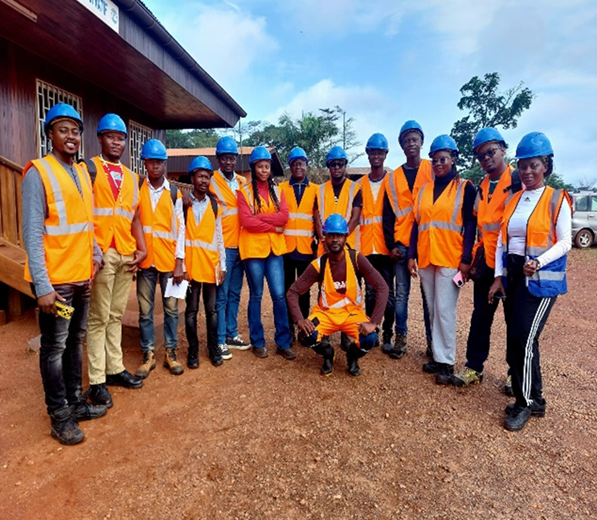
From March 16 to April 4, 2026, students from the 6th cohort in Forest Management Techniques at ERAIFT on mobility at CRESA stayed at PALLISCO as part of an educational program covering a series of courses focused on tropical forestry. Supervised by Professor Jean-Louis Doucet of the University of Liège and Dr. Abdel Malik Atoupka of the University of Dschang, this company immersion is a vital part of their training. It helps them convert theoretical knowledge into practical skills suited to the complex conditions of the Congo Basin.
In this context, the module, designed as a genuine field laboratory, aims to train managers capable of balancing economic performance, biodiversity conservation, and local development. To achieve this objective, the program is structured around seven key pedagogical pillars: pragmatic decision-making, intercultural collaboration, resilience to unforeseen challenges, stakeholder mediation, strategic planning oriented toward FSC certification, technical mastery of sustainable practices, and complex project management.
Furthermore, the training, developed in partnership with the University of Liège, ERAIFT, and PALLISCO, was implemented in three interconnected phases. First, the initial phase focused on technical and digital skills, introducing analytical tools such as R software, along with the fundamentals of forest management. Next, the second phase emphasized industrial operations and FSC certification requirements, including the assessment of high conservation value forests. Finally, the third phase addressed social dimensions through fieldwork and engagement with local communities, concluding with an evaluation of the participants' competencies.
Beyond academic validation, the program seeks to build a regional network of experts from across the Congo Basin, including the DRC, Cameroon, Gabon, the Central African Republic, and the Republic of Congo. In this regard, this initiative, referred to as a “coalition of excellence”, relies on strong collaboration between academic institutions and forestry sector stakeholders, with logistical support from CRESA.
ERAIFT thanks the European Union and AGRINATURA for their financial support. It also acknowledges PALLISCO's hospitality and its significant contribution to the practical training of African professionals. ERAIFT thanks Professor Jean-Louis Doucet for his continued commitment to the training of future African leaders.
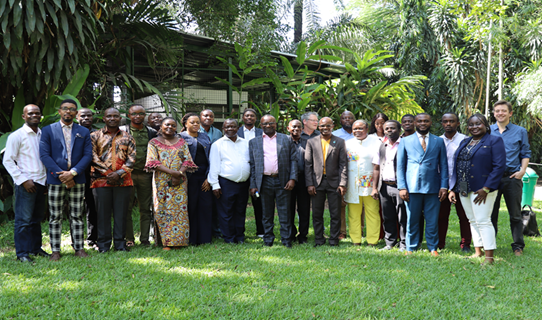
From March 24 to 26, 2026, the Regional Post-Graduate Training School on Integrated Management of Tropical Forests and Lands (ERAIFT) participated in a training workshop dedicated to the Biodiversity Clearing-House Mechanism (CHM) in the Democratic Republic of the Congo.
This activity was organized by the General Secretariat for Environment, Sustainable Development and Climate Economy, through the Directorate of Sustainable Development (DDD), with financial support from German Development Cooperation (BGF/GIZ) and technical assistance from the Biodiversity Capacity Building Programme of the Royal Belgian Institute of Natural Sciences (CEBioS).
Held in person at Cercle Elais in the Gombe municipality of Kinshasa, the workshop was facilitated by Mr. Han De Koeijer and Mr. Pierre Huybrechts, respectively the Belgian CHM National Focal Point and Head of the Awareness Component. It brought together fifteen (15) participants from public institutions, civil society organisations, Indigenous Peoples and Local Communities (IPLCs), the scientific community, and international non-governmental organizations.
The workshop enabled participants to:
gain insights into relevant decisions of the Conference of the Parties to the Convention on Biological Diversity (COP-CBD) related to the CHM;
strengthen their knowledge of the CHM and its functioning;
review the status of CHM implementation in the DRC;
share observations and recommendations and define the next steps.
ERAIFT’s participation in this workshop aligns with its mission to promote the sustainable management of forests and tropical landscapes, as well as to strengthen institutional and technical capacities in biodiversity conservation and valorization.
ERAIFT commends the commitment of the General Secretariat for Environment, Sustainable Development and Climate Economy and its technical and financial partners, particularly GIZ and CEBioS, whose support has contributed to strengthening national capacities in biodiversity information management and sharing.
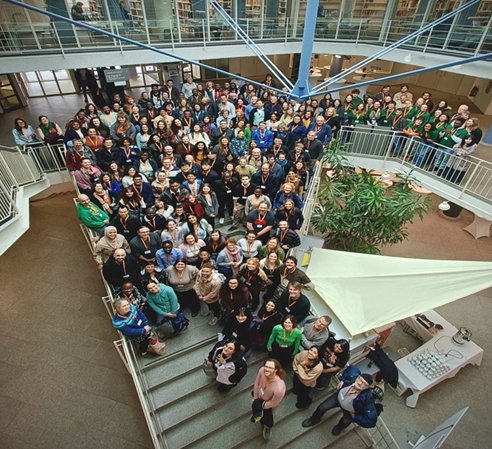
As part of the implementation of the project entitled “Evaluation de la valeur des Services Ecosystémiques de la Réserve de Biosphère de Luki (EVASE_RBL)”, ERAIFT was invited to present an oral communication at the 2026 European Conference on Tropical Ecology on the topic: "Community Perceptions of Ecosystem Services of the Luki Biosphere Reserve, Democratic Republic of the Congo." This high-level conference was held from February 23 to 27, 2026, at the University of Passau in Germany.
Under the theme "Species – Ecosystems – People", this international conference provided a forum to examine the interactions between biodiversity, ecosystems, and societies in tropical and subtropical regions. ECTE 2026 brought together researchers from Europe and the Global South to exchange knowledge, combine their perspectives, and strengthen long-term cooperation to promote biodiversity and social well-being. The conference included plenary sessions, thematic sessions, and interactive exchange formats, and particularly fostered networking between established and early-career researchers. Special attention was paid to digital innovations such as remote sensing, modeling, and open data platforms, which enable a better understanding of tropical ecosystems and nature conservation.
ERAIFT thanks its partners for their collaboration, in particular the University of Liège through the Faculty of Gembloux AgroBioTech, and INERA.
This participation in the Conference was possible thanks to the RESSAC program, implemented by CIFOR-ICRAF and funded by the European Union.
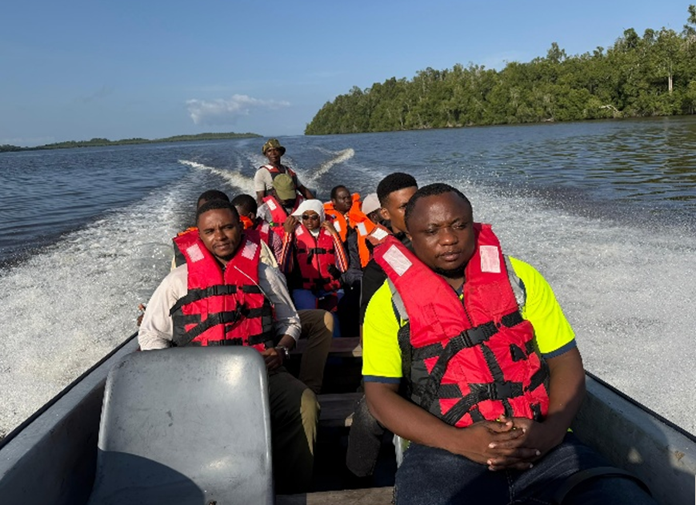
The learners of the ERAIFT regional Master's in scientific immersion in the landscape of Luki–Muanda
From February 19 to 28, 2026, ERAIFT (Regional Postgraduate School of Integrated Forest and Land Management in Tropical Regions) conducted hands-on field training as part of the course titled: 'Intersectoral and Integrated Approach: Forests, Agriculture, Livestock, Fishing, Tourism, Notions of Demography and Population Movements.' The focus was on: 'Economic Development of the Ecological Corridor of the Luki Biosphere Reserve – Mangrove Marine Park in the Democratic Republic of the Congo and the Dimonika Biosphere Reserve in the Republic of Congo, within the context of the Kivu–Ocean Green Corridor». This topic supports the initiatives of the Kivu–Kinshasa Green Corridor project, which promotes integrated territorial planning that balances conservation with economic growth, with the goal of establishing an ecological corridor between Luki–Muanda and Luki–Dimonika.
Over ten days, 80 learners from ERAIFT, spanning 13 African countries—including the Democratic Republic of the Congo, Cameroon, Gabon, Guinea, Mali, Benin, Togo, Senegal, Central African Republic, Niger, Republic of Congo, Burkina Faso, and Chad—deliberated on an integrated model for managing and developing the Luki–Muanda landscape. This model encompasses agriculture, agro-industry, livestock, tourism, mono- and multimodal infrastructure, biodiversity conservation, energy, fishing, and aquaculture.
The activities occurred primarily within the Luki Biosphere Reserve and the Mangroves Marine Park, key regions for conservation and sustainable development. Interactions with managers, local authorities, economic stakeholders, and nearby communities grounded academic insights in practical settings. These initiatives underscored the importance of inclusive governance, which involves multi-stakeholder consultation, comprehensive spatial planning, and the integration of socio-economic and environmental considerations issues.
The immersion also encouraged a learning-by-doing approach, enhancing critical analysis skills, data collection and processing capabilities, and the development of operational recommendations suited to the local context. Professionally, this experience strengthened teamwork in a multicultural environment and fostered collaborative leadership. It also helped participants better understand how demographic dynamics, pressures on natural resources, and opportunities for sustainable economic development interact.
ERAIFT would like to thank the European Union and NATURAFRICA for their financial support. ERAIFT would also like to thank AIDS and WWF for their support and renewed confidence. ERAIFT also thanks the Congolese Institute for Nature Conservation (ICCN) and INERA for welcoming the students to Muanda and Luki. Special thanks to PERENCO, site managers, and other stakeholders for welcoming the learners and their effective collaboration.
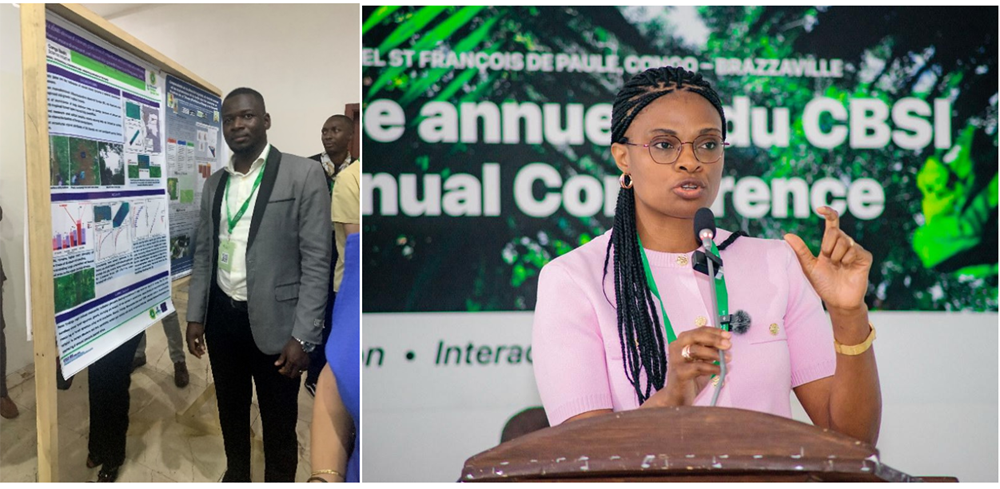
From 7 to 9 January 2026, ERAIFT, through its researchers and PhD candidates, took part in the First Annual Conference of the Congo Basin Science Initiative (CBSI). On the sidelines of this event, several research studies conducted in the Congo Basin, in which ERAIFT is closely involved, were presented and discussed.
Like ERAIFT, which promotes an integrated and systemic approach in its training and research activities, CBSI is an initiative whose vision is to address knowledge gaps by promoting integrated, relevant, and policy-relevant science. In this context, this first conference, held under the theme “Information, Interaction and Inclusion,” aimed to strengthen and facilitate collaboration among researchers in the Congo Basin; to develop plans to coordinate and collect data distributed across the Congo Basin region within six thematic observatories—climate, hydrology, vegetation, biodiversity, land use, and socio-ecology; to present research broadly aligned with these six observatories, with a particular focus on early-career researchers; and to establish syntheses, synergies, and impacts, including how scientific results that enhance forest protection and improve the livelihoods of local forest communities are generated.
ERAIFT expresses its deep appreciation to the CBSI Steering Committee, the UK International Development, and all its technical partners working in the Congo Basin for this fruitful collaboration, which contributes to strengthening the scientific network in the sub-region. ERAIFT also extends its sincere thanks to the European Union for its continued support.
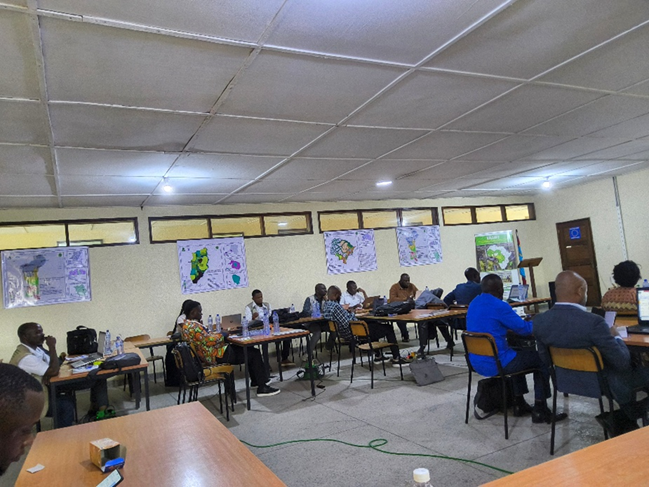
On Monday, december 29, 2025, ERAIFT held a workshop in its conference room to share experiences from the participatory development of the Simple Land Use Plans (PSAT) in the AVENIR project's intervention provinces. This event was part of an ongoing effort to enhance collaboration among stakeholders involved in the project and to extract key lessons from the local land-use planning process.
This activity involved several participants, including the AVENIR project partners from Kwilu, Kwango, Kongo-Central, and Maï-Ndombe provinces, representatives from the Ministry of Land Use Planning, and the AVENIR project's national coordination team. The discussions focused on field experiences, best practices, and the challenges faced in supporting local communities.
The workshop opened with a review of the partnership goals between ERAIFT and the AVENIR project, then outlined the land-use planning process in the Democratic Republic of Congo, covering the existing legal and institutional frameworks. The conversation then shifted to the progress made by farmers' federations in supporting communities with developing and implementing the PSATs, emphasizing the significance of a participatory approach for sustainable land management.
Participants provided several recommendations to improve the implementation and promote greater adoption of the PSATs by local and institutional stakeholders. L’ERAIFT thanks His Excellency Muhindo Nzangi, Minister of Agriculture of the DRC, for involving him in the implementation of the AVENIR project. It also thanks the International Fund for Agricultural Development (IFAD) and the French Development Agency (AFD) for their funding support. Finally, ERAIFT expresses its gratitude to the various farmers' federations for their active collaboration and commitment to inclusive and sustainable land-use planning.
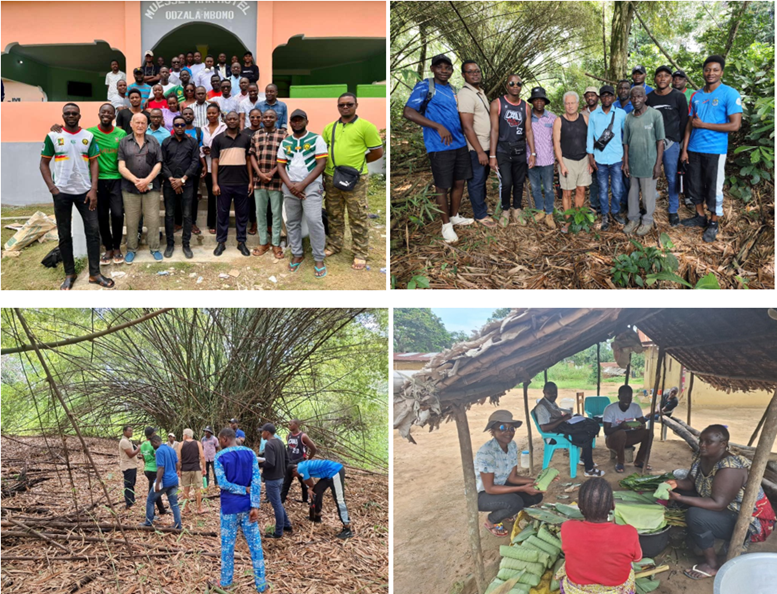
The Regional Postgraduate School of Integrated Management of Tropical Forests and Territories (ERAIFT) has successfully concluded its 2025 Integrated Field Training Programme in Planning and Integrated Development (STADI). For nearly three months, 40 students from seven countries of the COMIFAC region were immersed in the heart of Odzala-Kokoua-Lossi National Park (PNOKL), one of the oldest and largest protected areas in Africa.
STADI 2025 enabled these future managers of tropical forests and protected areas to acquire hands-on expertise through a systemic and interdisciplinary approach. Participants were trained in modern tools for data collection and analysis. Thematic modules focusing on governance, biodiversity, value chains, gender, and human rights were delivered by international experts.
The learners produced geospatial databases, participatory maps, and SWOT analyses (Strengths, Weaknesses, Opportunities, Threats), all of which will contribute to a deeper understanding of the socio-ecological challenges facing PNOKL. Interactions with local communities, park management authorities (African Parks Network), and local government representatives helped strengthen partnerships and promote inclusive natural resource management.
Despite certain constraints, this field training demonstrated the critical importance of community engagement and methodological innovation.
ERAIFT intends to sustain this partnership with PNOKL and its partners, while enhancing the value of the data collected through scientific publications. A set of recommendations was formulated to strengthen local capacities, improve communication infrastructure, and foster more participatory governance.
STADI 2025 was made possible thanks to the close collaboration between ERAIFT, the Congolese authorities – notably Her Excellency Ms. Rosalie Matondo, Minister of Forest Economy – the Odzala-Kokoua-Lossi Foundation, the African Parks Network, and financial and technical partners, including the European Union, AGRINATURA, and PARTICIP. ERAIFT wishes to express its profound gratitude to all of them and to extend its sincere appreciation to the European Union and AGRINATURA for their renewed trust.
Connect with us
Campus UNIKIN - BP 15373 - Kinshasa - Commune de Lemba - RD Congo